Harvest: A Modern Take on Stacked Display Typography
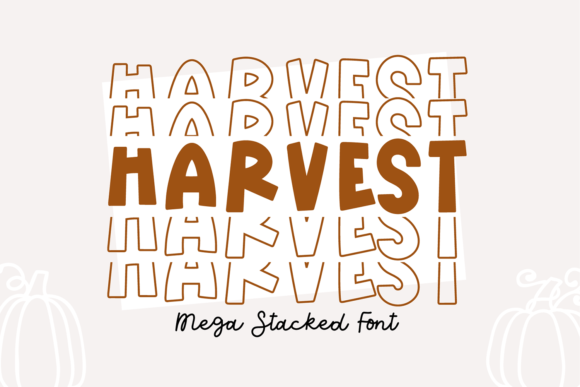
There’s a particular kind of visual energy that comes from stacked, blocky type. It feels grounded, confident, and ready to make a statement. The Harvest font family captures this energy with a fresh, contemporary edge. It’s not just another bold face; it’s a display font designed to command attention in short, impactful bursts. Its core style, characterized by a stacked effect, gives letterforms a unique, compact structure that feels both architectural and playful.
At its heart, Harvest is a premium font that understands its role. It’s built for headlines, logos, and social media posts where clarity and personality are paramount. The letterforms are clean and geometric, with a consistent weight that ensures visual harmony even when characters are layered or arranged in tight compositions. This isn’t a typeface for body text; it’s a tool for creating moments of emphasis. The Harvest Mega Stacked variant takes this further, amplifying the blocky, layered aesthetic for maximum impact. It includes a full set of numbers and essential punctuation, making it a versatile design asset for a wide range of projects.
Where Harvest Finds Its Voice
The strength of a creative font like Harvest lies in its specific applications. It thrives in environments where a strong, modern voice is needed. For social media graphics, it’s a natural fit. Think Instagram stories, quote cards, or promotional banners where text needs to stop the scroll. The stacked effect creates an inherent graphic element, turning words into visual anchors. This makes it excellent for content creators and marketers looking to build a recognizable aesthetic.
In the realm of brand identity, Harvest can serve as the cornerstone for a bold, contemporary look. It’s particularly effective for businesses targeting a younger, design-savvy audience—think urban outfitters, modern cafes, fitness brands, or tech startups. Its geometric nature lends itself well to logo design, especially for brands that want to project confidence and clarity. When used in packaging design, it can make product names pop on shelf, ensuring quick recognition. For entrepreneurs and small business owners, it offers a way to inject personality into branding without sacrificing professionalism.
Beyond digital, Harvest has a strong place in print and craft. Its bold lines make it ideal for invitations, event posters, and editorial design for magazine covers or pull quotes. For the crafter and hobbyist, it’s a fantastic choice for vinyl decals, t-shirt designs, and home decor projects. The clear, blocky shapes are easy to cut and weed, making it a practical choice for physical applications.
Making Harvest Work: Practical Guidance for Your Projects
Choosing the right typeface is about more than just liking how it looks. It’s about fit. Before committing to Harvest, ask yourself: does my project need a strong, singular voice? If you’re designing a long-form document, a serif font or a clean sans serif font would be more appropriate. But if you need a headline that grabs, a logo that sticks, or a social post that pops, Harvest is worth serious consideration.
A key part of using any display font effectively is font pairing. Harvest’s bold, geometric personality works best when balanced with a more neutral companion. Pair it with a simple, readable sans serif font for body copy to create a clear visual hierarchy. For a more dynamic contrast, you could pair it with a flowing script font or a handwritten font for accents, letting the contrast highlight the strength of each. Always test your pairings in context—see how they look on a mockup of your final product, whether it’s a website header or a printed flyer.
When evaluating a font like Harvest, look beyond the initial appeal. Review the full character set. Does it include the specific punctuation or accented characters your project requires? For commercial use, ensure the licensing aligns with your needs—whether for a single client project or for use in products for sale. This is a critical step for designers and publishers to avoid issues down the line.
Finally, consider readability. While Harvest is designed for clarity at large sizes, its stacked effect can reduce legibility if used too small or in long strings of text. Use it for short, powerful statements. Let the surrounding white space and simpler typefaces do the heavy lifting for longer content. This thoughtful approach ensures your design remains both beautiful and functional, strengthening your brand perception through consistent, intelligent typography choices.