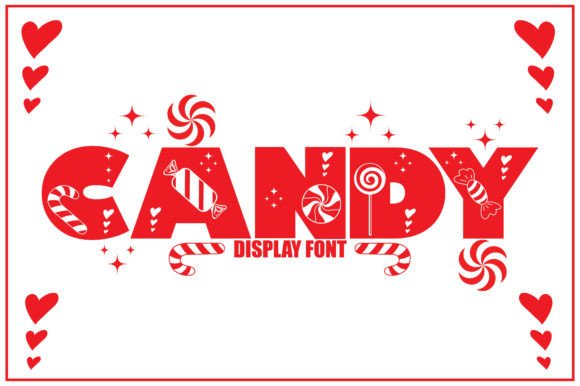
Candy: The Playful Display Font for Modern Projects
Every designer knows the feeling: you have a brilliant concept, but the typography just won’t cooperate. You need something that captures attention instantly, something that feels approachable yet confident. Enter Candy, a display typeface that balances sweetness with striking presence. This isn’t just another cute font; it’s a versatile tool for projects that need to connect on a human level.
Candy’s personality shines through its carefully crafted letterforms. Notice the soft, rounded terminals and the slightly condensed proportions. These features give it a friendly, welcoming vibe without sacrificing legibility. The curves feel organic, almost hand-drawn, which adds warmth and authenticity. At the same time, the consistent weight and spacing ensure it performs reliably across different sizes. It’s a modern typography choice that avoids the coldness of some geometric sans serifs while steering clear of overly whimsical scripts.
Where Candy Truly Shines
Think about the projects where first impressions matter most. A startup’s landing page needs to build trust quickly. A children’s book cover has to spark imagination. A social media graphic has milliseconds to stop a scrolling thumb. Candy excels in these scenarios because its visual language is universally appealing. It’s a premium font that feels accessible, making it ideal for brands that want to appear innovative yet relatable.
For entrepreneurs and small business owners, font selection is a critical part of brand identity. Candy offers a distinct voice that can help differentiate a business in a crowded market. Imagine it used for a boutique bakery’s logo, where the font’s playful curves echo the artistry of pastries. Or consider a tech startup’s app interface, where Candy’s clarity and friendly demeanor can make complex features feel more approachable. It’s a creative font that adapts to the story you want to tell.
Practical Applications Across Media
In packaging design, Candy can transform a product’s shelf appeal. Its bold, rounded characters work beautifully for product names on labels, especially for items targeting families, wellness, or gourmet treats. The font’s inherent cheerfulness can evoke positive emotions, subtly influencing a customer’s perception of quality and care. For editorial design, think magazine headlines or chapter titles in lifestyle publications. Candy adds a touch of personality without overwhelming accompanying body text, which might be set in a classic serif font for contrast.
Digital applications are where Candy’s versatility truly comes alive. As a web design asset, it’s perfect for hero sections, call-to-action buttons, and navigation menus where clarity and personality are paramount. Its high x-height and open counters ensure readability on screens, even at smaller sizes. For social media graphics, Candy becomes a powerhouse. It cuts through the noise of a busy feed, making quotes, announcements, and promotional offers instantly engaging. Pair it with a clean sans serif font for captions, and you have a professional, cohesive look.
Integrating Candy into Your Design Workflow
Choosing a font is more than just picking something that looks nice. It’s about finding the right tool for the job. Before committing to Candy for a major project, test it in context. Create mockups for your intended use—whether it’s a website header, a business card, or a poster. Evaluate its performance at various scales. Does it maintain its charm when scaled down for a footnote? Does it hold its own when blown up for a billboard? This practical testing is crucial for any commercial font.
Font pairing is another essential skill. Candy’s friendly, rounded style makes it a fantastic partner for more neutral typefaces. Try combining it with a sturdy, geometric sans serif font for body copy to create a balanced hierarchy. For a more dynamic editorial layout, you might pair it with a traditional serif font, letting Candy handle the headlines to draw readers in. The goal is contrast and harmony, not competition. Review the font’s included styles and weights; often, a display font like Candy will have multiple variants that can add nuance to your designs.
Key Considerations for Professional Use
Always consider the licensing of any design asset. For Candy, ensure the license covers your intended use, whether it’s for a single client project, unlimited commercial work, or specific digital applications like app interfaces or e-books. Understanding the terms protects you and your clients legally. Furthermore, think about the long-term consistency of your brand identity. A typeface like Candy can become a recognizable element of your visual language, but it must be used consistently across all touchpoints to build that recognition.
Ultimately, typography is about communication. Candy communicates joy, approachability, and modern creativity. It’s a typeface that can make a brand feel more human, a design more engaging, and a message more memorable. By thoughtfully applying its strengths—whether in logo design, marketing materials, or personal craft projects—you can leverage this display font to create work that doesn’t just look good, but feels right. The best results come from understanding a font’s personality and letting it enhance, not dominate, your overall design narrative.