Springline: Adding a Touch of Whimsy to Your Designs
Understanding the Essence of Springline
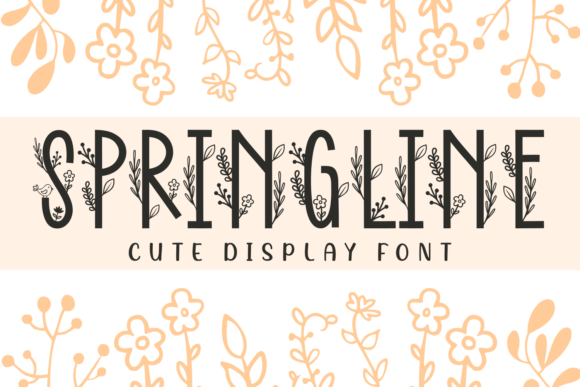
When you first encounter Springline, it doesn’t just display text; it tells a story of growth and gentle elegance. As a premium font in the display category, its defining characteristic is the integration of delicate floral ornaments woven directly into the letterforms. Unlike a standard serif font or a rigid sans serif font, this typeface feels organic and alive. It bridges the gap between a script font and a structured display face, offering a creative font solution that feels both professional and deeply personal.
The visual personality of Springline is undeniably friendly. It avoids the sharp edges that can make some typography feel cold or corporate. Instead, the curves are soft, and the decorative elements—those little botanical touches—add a layer of sophistication without cluttering the visual field. It’s a modern typography choice that respects traditional aesthetics, making it a versatile design asset for anyone looking to inject warmth into their work.
Real-World Applications for Branding and Marketing
For entrepreneurs and small business owners, choosing the right brand identity can be daunting. You want something that stands out, but you also need something that remains readable. Springline shines brightest in logo design. Imagine a boutique bakery, a wedding planning service, or a botanical skincare line using this font. It immediately signals to the customer that the brand values care, nature, and aesthetics. It creates a visual shorthand for "premium" and "artisanal" before the customer even reads the tagline.
Beyond the logo, this display font is a powerhouse for packaging design. In a crowded market, shelf appeal is everything. The ornamental details of Springline catch the eye, encouraging consumers to pick up the product. However, a word of practical advice: because of its decorative nature, it is best used for headlines, product names, or short bursts of text on packaging, rather than the ingredient list or legal copy. Pair it with a clean, neutral font for the details to ensure compliance and clarity.
In the realm of social media graphics and digital marketing, Springline helps cut through the noise. Feed algorithms favor engagement, and graphics that look distinct tend to stop the scroll. Use it for quote cards, announcement banners, or sale graphics. It adds a layer of polish that standard system fonts simply cannot provide, helping to elevate your content from amateur to professional with a single asset swap.
Editorial and Publishing: Setting the Tone
For bloggers, publishers, and content creators, the typography sets the mood of the entire piece. If you are working on editorial design for a lifestyle magazine, a gardening blog, or a travel journal, Springline offers a distinct voice. It works exceptionally well for drop caps or pull quotes, drawing the reader’s eye to key moments in the narrative.
Consider a blog header featuring the font. It establishes the site's personality instantly. It tells the reader that the content is likely curated, thoughtful, and aesthetically driven. This is crucial for building a loyal audience; visual consistency builds trust. When your typography matches your tone, the reading experience becomes seamless.
Technical Guidance: Pairing and Hierarchy
One of the most common questions regarding decorative fonts is: "What do I pair it with?" Because Springline is expressive, it requires a grounding partner. A geometric sans serif font often works best. The simplicity of the sans serif allows the floral details of Springline to breathe without competing for attention.
When creating visual hierarchy, assign Springline to the top tier. Use it for H1 headers, main titles, and focal points. Use your secondary font for subheadings and body text. This structure guides the reader’s eye naturally from the artistic hook to the informational content.
- Spacing: Because of the ornaments, pay close attention to tracking (letter-spacing). You may need to increase it slightly to prevent the decorative elements from colliding with adjacent letters.
- Size: This is not a web design font for 12px body copy. It needs size to show its details. Aim for 24px and larger for maximum impact.
- Color: While it looks great in black, don't be afraid to use it in soft pastels or earthy tones to enhance the botanical vibe.
Licensing and Project Fit
Before you add it confidently to your projects, it is vital to review the commercial font licensing. Most premium fonts, including Springline, come with specific licenses. If you are a freelancer designing a logo for a client, ensure the client has the appropriate license to use the font in their final commercial assets. If you are a crafter selling physical goods (like printed mugs or t-shirts), verify that the license covers "print on demand" or physical end-products.
Evaluating project fit is also key. Ask yourself: Does this project require a serious, corporate tone? If yes, Springline might be too whimsical. But if the goal is to convey warmth, creativity, nature, or elegance, it is likely the perfect fit.
Ultimately, Springline is more than just a collection of glyphs; it is a stylistic tool. It allows designers, marketers, and hobbyists to communicate emotion through type. By using it strategically—balancing its decorative flair with functional design principles—you can create work that feels both professional and deeply human. You will love the results when you see how a single font choice can transform a flat design into a vibrant visual experience.