Retro Wonder: A Groovy Display Font for Modern Creativity
Finding a typeface that captures a specific mood without feeling dated or clichéd is a common challenge. You want personality, but not at the expense of clarity. You want nostalgia, but with a fresh, contemporary edge. This is the space where Retro Wonder operates. It’s a retro groovy display font that balances playful authenticity with practical versatility, making it a valuable asset in a designer’s toolkit.
The Visual Personality of Retro Wonder
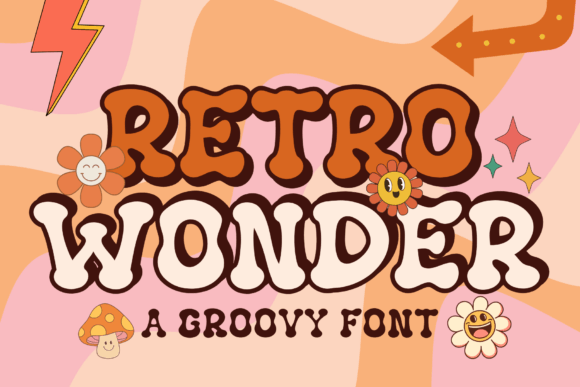
At its core, Retro Wonder is a display font. This means it’s designed for impact at larger sizes—think headlines, logos, and banners—rather than for long blocks of body text. Its character is immediately apparent: rounded forms, subtle curves, and a warm, approachable vibe that recalls the optimistic typography of the 1960s and 70s, but filtered through a modern sensibility. It avoids the extreme quirks that can make some retro fonts hard to read, focusing instead on a smooth, flowing rhythm.
The font’s appeal lies in its ability to feel both familiar and new. It has the charm of a handwritten font but with the consistency and precision of a carefully crafted digital typeface. The letterforms have a slight bounce and a friendly, open stance. This isn’t a font that shouts; it converses. It brings a sense of warmth and handcrafted quality to any project, which is a powerful tool in an era of sterile, overly geometric designs.
Where Retro Wonder Truly Shines
The practical strength of Retro Wonder is its adaptability across a surprising range of applications. Its primary role is in projects where personality and approachability are key. For logo design, it can instantly convey a brand that is creative, fun, and trustworthy. A boutique coffee shop, a children’s book author, or a handmade craft business could build a entire brand identity around its friendly curves.
In editorial design and publishing, it’s perfect for chapter titles, pull quotes, or magazine covers where you need to draw the reader in with a distinct voice. Bloggers and content creators find it invaluable for creating standout social media graphics that stop the scroll. It works beautifully on invitations, greeting cards, and planners, adding a personal, celebratory touch. For packaging design, especially for artisanal or gourmet products, it communicates authenticity and care.
Even in digital spaces, its clarity holds up. Used sparingly for key headings on a website or in an email newsletter, it can guide the reader’s eye and break up visual monotony. It’s a creative font that serves a strategic purpose: to make your message more memorable and engaging.
Making Smart Design Decisions with a Display Typeface
Choosing a font like Retro Wonder is just the first step. Using it effectively requires a thoughtful approach. Because it’s a display font, readability at small sizes or in long paragraphs is not its strength. Pair it wisely. A classic, neutral sans serif font or a clean serif font for body copy will provide a perfect counterbalance, letting Retro Wonder’s personality shine without overwhelming the reader. This practice of font pairing is fundamental to creating professional, readable layouts.
Consider the context. Will your project be viewed on a screen or in print? Retro Wonder holds up well in both, but it’s always good practice to test. Create mockups for your web design or print layout. Check the kerning (the space between letters) and leading (line spacing) in your specific application. A great premium font comes with these details refined, but your project’s unique demands might require minor adjustments.
Finally, understand the licensing. If you’re using it for a client’s logo, a product you sell, or a commercial website, you need a commercial font license. Most reputable font licenses are clear and straightforward, granting you the rights you need for your intended use. This protects both you and the font’s creator, ensuring you can use this valuable design asset with confidence.
Elevating Your Projects with Intentional Typography
Typography is often the silent workhorse of good design. The right typeface does more than just display words; it sets a tone, guides perception, and builds consistency. Incorporating a font like Retro Wonder into your brand identity or project toolkit is an investment in that tonal control. It helps create a cohesive visual language that audiences can recognize and connect with.
Think about the brands and designs you admire. Often, their power lies in consistent, thoughtful typography. By choosing a distinct yet versatile display font, you’re not just picking letters—you’re selecting a voice. Retro Wonder offers a voice that is groovy, authentic, and ready to make your next project stand out. Add it to your designs, test its limits with your favorite font pairing, and enjoy the results it brings to your creative work.