Brown Bear: A Script Font with a Story to Tell
There's a particular kind of magic in lettering that feels both intentional and effortless—the sort of typeface that makes you lean in, not because it's shouting, but because it's speaking directly to you. That's the space Brown Bear occupies. It's a script font that carries the spontaneity of hand-lettering without sacrificing the consistency a professional project demands. If you've ever scrolled through dozens of premium font options and felt that none of them quite captured the warmth you were after, Brown Bear might be the answer you didn't know you needed.
What Makes Brown Bear Feel Different
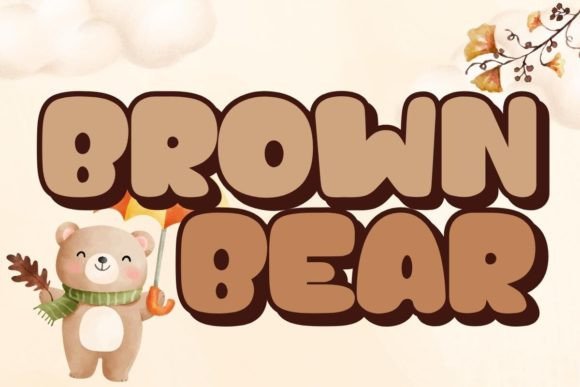
At its core, Brown Bear is a display font with a handwritten soul. The letterforms have a gentle, organic flow—rounded strokes that taper naturally, slight variations in weight that mimic the pressure of a real pen on paper. Unlike rigid sans serif font families or formal serif font options, Brown Bear doesn't try to be neutral. It has personality baked into every curve and connection.
What sets it apart from many script font alternatives is its readability at mid-range sizes. A lot of handwritten font designs look gorgeous in a headline but fall apart the moment you try to use them at 14 points or below. Brown Bear holds its character even when scaled down, which opens up a wider range of applications than you might expect from a typeface in this category.
The visual tone sits somewhere between playful and polished. It's not whimsical enough to feel juvenile, and it's not so refined that it reads as cold. That middle ground is surprisingly rare in modern typography, and it's exactly why Brown Bear works across such a diverse set of projects.
Where Brown Bear Actually Works
Let's get practical. A font is only as valuable as the contexts where it performs well, and Brown Bear has a genuinely broad range.
Brand Identity and Logo Design
For small businesses, boutiques, cafés, artisan brands, and personal brands, Brown Bear offers an immediate sense of approachability. A bakery logo, a wellness studio wordmark, a handmade goods label—these are spaces where a creative font with human warmth builds trust before a customer reads a single line of copy. Used as a primary logotype or paired with a clean sans serif font for supporting text, it creates a visual identity that feels lived-in and genuine.
Packaging Design
Packaging is where Brown Bear truly shines. Think product labels, box graphics, tag lines on wrapping paper, ingredient lists styled as secondary text. The font's organic rhythm complements physical textures—kraft paper, linen, glass—in a way that geometric typefaces simply can't. If you're working on packaging design for a food brand, cosmetics line, or craft product, this typeface brings a tactile quality to flat graphics.
Editorial and Publishing
In editorial design, Brown Bear works beautifully for chapter titles, pull quotes, magazine headers, and cookbook subheadings. It's less suited for body copy in long-form reading (as most script fonts are), but as a complement to a sturdy serif or sans serif for body text, it introduces visual variety without breaking the reading flow. Publishers working on lifestyle magazines, recipe books, or creative journals will find it particularly useful.
Digital and Social Media
For web design, Brown Bear works well in hero sections, call-to-action phrases, and testimonial highlights—places where you want a human moment in an otherwise structured layout. On social media graphics, it's ideal for quote posts, story overlays, promotional banners, and influencer-style content where authenticity matters. The key is using it strategically: one or two lines of Brown Bear surrounded by generous white space or a clean type pairing will always outperform a full paragraph set in script.
Personal and Craft Projects
Hobbyists and crafters will appreciate Brown Bear for invitations, greeting cards, scrapbooking, wall art, and personal stationery. It's the kind of design asset that earns its place in a toolkit because it gets used repeatedly—not just once and forgotten.
How the Right Script Font Shapes Perception
Typography isn't decoration. It's communication. The font you choose for a headline, a product name, or a social post does measurable work in shaping how your audience perceives your message.
Brown Bear influences brand perception in a specific direction: warmth, authenticity, creativity, and care. When a customer sees it on a label or a website, they're absorbing signals about the brand's personality before they process the words themselves. That's not theory—it's how visual hierarchy and typographic tone function in practice.
Consider readability carefully. Brown Bear performs well at display sizes and moderate text sizes, but like any script font, it demands attention to spacing and contrast. Set it against a clean background. Give it room to breathe. Avoid stacking long sentences in this typeface, and you'll maintain both legibility and impact.
Audience engagement often hinges on small details. A social media post set entirely in a neutral sans serif might get scrolled past. The same content with a Brown Bear headline and a clear typographic hierarchy draws the eye and invites a pause. That pause is where engagement begins.
Working with Brown Bear in Your Projects
Before committing any commercial font to a project, test it in context. Drop Brown Bear into your actual layout—not just a blank canvas. See how it interacts with your color palette, your imagery, and your other typefaces.
Font pairing is where the real craft comes in. Brown Bear pairs well with clean, geometric sans serifs for a modern contrast, or with a traditional serif for a more layered, editorial feel. Try it alongside typefaces like Montserrat, Lora, or even a straightforward grotesque sans serif. The goal is contrast in style but harmony in tone—both fonts should feel like they belong in the same conversation.
Check what's included with the font family. Many premium script fonts come with alternates, ligatures, and stylistic sets that let you customize the look of specific letter combinations. If Brown Bear includes these features, explore them. Swapping an alternate "g" or connecting two letters differently can make the difference between text that looks typeset and text that looks hand-lettered.
Licensing matters. If you're using Brown Bear for a client project, a product you're selling, or a commercial website, confirm that the license covers your intended use. Most commercial font licenses are straightforward, but it's worth verifying before a project goes to print or goes live.
Finally, trust your eye. Typography is a practice, not a formula. Set your text in Brown Bear, step back, and ask whether it supports the story you're telling. If the answer is yes, you've found the right fit. If something feels off, it might be a pairing issue, a sizing issue, or simply a tonal mismatch—and those are all solvable with a bit of experimentation.
Brown Bear isn't trying to be every font for every project. It's a design asset built for moments that call for personality, warmth, and a human touch. Used with intention, it elevates work from competent to memorable—and that's the line where good design becomes great design.