The Againts: A Typeface for Bold, Unsettling Design
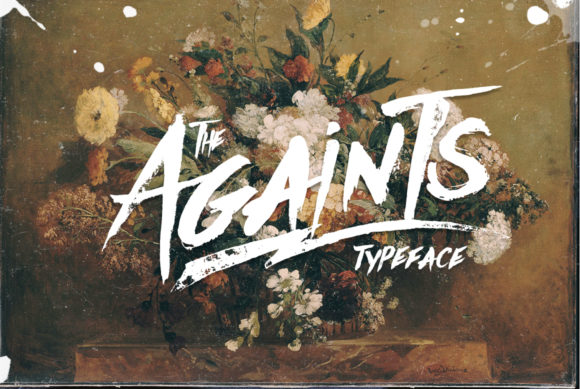
Finding a font that carries genuine edge—something that feels raw, textured, and unapologetically bold—is a challenge many designers face. Too often, typefaces marketed as "edgy" end up looking cartoonish or lack the sophistication needed for professional work. The Againts steps into that space with a different kind of presence. It's a premium font that doesn't try to be polished or conventional. Instead, it leans into rough textures, irregular forms, and a visual weight that immediately sets a mood. If your project calls for something with a spooky, creepy, or simply unconventional atmosphere, this typeface delivers in ways that feel authentic rather than forced.
What makes The Againts stand apart from other creative fonts is its refusal to smooth over imperfections. The letterforms have a hand-hewn quality—edges that feel worn, strokes that vary in density, and a visual rhythm that keeps the eye engaged. It's a display font, which means it thrives at larger sizes where those details can breathe and make an impact. Think of it as the typographic equivalent of an old horror movie poster or a weathered sign you'd find at the edge of a forgotten town. There's character in every glyph, and that character translates directly into the projects it touches.
Where The Againts Finds Its Voice
This isn't a typeface you'd set a 300-page novel in, and that's entirely by design. The Againts excels in contexts where atmosphere and visual impact matter more than extended readability. In logo design, it can give a brand an immediate sense of identity that's impossible to ignore. Picture a boutique horror film festival, a craft brewery with a dark aesthetic, or an independent clothing label that trades in alternative culture. The Againts becomes the visual shorthand for everything those brands represent—mystery, rebellion, and a refusal to blend in.
Editorial design benefits enormously from typefaces with this kind of personality. Magazine covers, chapter headings in genre fiction, or feature spreads in culture publications can use The Againts to create visual hierarchy that pulls readers in. It pairs exceptionally well with clean serif fonts or straightforward sans serif fonts for body copy, letting the display type do the heavy lifting while supporting text remains comfortable to read over longer passages. That contrast between the bold display choice and the restrained body type is a foundational principle of modern typography, and The Againts makes it easy to execute.
Packaging design is another area where this typeface shines. Products targeting audiences who appreciate craft, authenticity, or unconventional aesthetics—artisanal goods, specialty spirits, limited-edition releases, or Halloween-themed merchandise—benefit from the visual texture The Againts brings. It communicates something about the product before a customer even reads the label. That kind of instant brand perception is invaluable, especially for small business owners competing on shelves or in crowded digital marketplaces.
Working With The Againts in Digital and Print
Social media graphics are a natural fit for a display font like this. Platforms reward content that stops the scroll, and The Againts does exactly that. Event announcements, promotional posts, podcast artwork, YouTube thumbnails, or seasonal marketing campaigns gain immediate visual weight when set in a typeface with this much personality. It photographs well, renders clearly at screen resolutions, and maintains its character across different devices—a practical consideration that sometimes gets overlooked when designers fall in love with a typeface's aesthetic.
Web design presents a slightly different set of considerations. The Againts works beautifully for hero sections, landing page headlines, and call-to-action elements where you want visitors to feel something immediately. However, because it's a display font with deliberate texture and irregularity, it's worth testing how it renders across browsers and screen sizes before committing to widespread use. Most experienced designers limit typefaces like this to headlines and accent elements, relying on more conventional choices for navigation, body text, and UI components. That discipline keeps the design feeling intentional rather than chaotic.
For print applications—posters, flyers, business cards, event invitations, merchandise—The Againts handles the transition well. The rough texture that defines its character reproduces faithfully in both digital and offset printing, though it's always smart to request a proof before committing to a large run. On textured paper stocks, the typeface takes on an additional layer of dimension that can be genuinely striking. Crafters and hobbyists working on personal projects like scrapbooking, handmade cards, or DIY wall art will also find it adds a distinctive touch that store-bought fonts simply can't replicate.
Choosing and Pairing The Againts Wisely
Evaluating whether The Againts fits a specific project comes down to a few honest questions. Does the project need to convey mood, atmosphere, or emotional weight? Is the primary use case headlines, titles, or short-form display text rather than extended reading? Does the brand or creative vision align with rough, textured, unconventional aesthetics? If the answer to those questions is yes, you've likely found a strong match.
Font pairing is where many designers either elevate a project or let it fall apart. The Againts demands a thoughtful counterpart. Clean geometric sans serif fonts provide excellent contrast without competing for attention. Classic serif fonts with moderate contrast can ground the composition with a sense of tradition. Avoid pairing it with other highly decorative or handwritten fonts, as the visual noise becomes overwhelming. The goal is contrast and balance—let The Againts be the loudest voice in the room while its supporting type stays quiet and functional.
Before starting any project, review the full character set and any included styles or alternates that come with the font. Understanding what's available helps you make the most of the design assets at your disposal. Pay attention to kerning and spacing at your intended size, since textured display fonts sometimes benefit from manual adjustments. Test the font in context—mock up your design at actual size rather than relying on small previews. Readability at a glance matters more than anything else for display typography.
Finally, confirm the commercial licensing covers your intended use. Whether you're creating brand identity materials for a client, designing products for sale, or building marketing campaigns, the license needs to match the scope of your work. Most premium font licenses distinguish between personal and commercial use, and respecting those terms is both a legal necessity and a professional standard. Once that's settled, The Againts becomes a genuinely versatile tool in your design toolkit—one that rewards creative ambition with results that feel distinctive, atmospheric, and entirely your own.