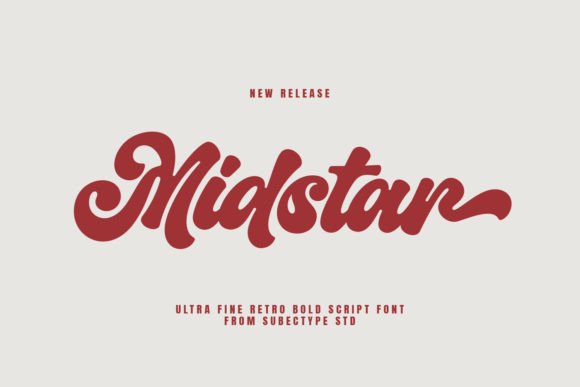
Midstar: Capturing the Groovy Spirit of Mid-Century Design
Finding a typeface that perfectly balances nostalgia with modern usability can feel like searching for a needle in a haystack. You want something that feels authentic to a specific era but doesn't look like a cheap imitation. That is where Midstar enters the conversation. This retro script display font is a deliberate nod to the mid-century era, capturing the smooth, flowing aesthetics of the 1950s and 60s. It isn't just a collection of letters; it is a visual time machine designed for creatives who appreciate the "groovy" vibes of the past.
The Anatomy of a Retro Vibe
When you look at Midstar, the first thing you notice is its fluidity. As a script font, it mimics the natural rhythm of hand-lettering, but with a distinct commercial polish. The strokes are smooth and confident, avoiding the scratchiness often found in rough handwritten fonts. Instead, it offers a sleek, retro elegance. The defining feature of this display font is its playful swashes. These decorative extensions give the typeface a sense of motion and personality, allowing you to add flair to specific letters at the beginning or end of a word.
Unlike a rigid sans serif font or a traditional serif font, Midstar commands attention through its shape alone. It is a premium font that understands its role: it is meant to be seen. The letterforms connect in a way that feels organic, creating a cohesive visual flow that guides the eye. For designers working on projects that require a nostalgic touch, this font provides an instant shortcut to that vintage atmosphere without needing complex texture overlays or filters.
Practical Applications: Where Midstar Shines
Understanding the personality of a font is one thing; knowing where to use it is another. Because Midstar is a display typeface, it is not designed for long blocks of body copy. Reading a full paragraph in a flowing script can be tiring for the eyes. However, for headlines, titles, and short bursts of text, it is incredibly effective.
Here are some specific scenarios where this font excels:
- Vintage Poster Design: If you are creating artwork for a local theater production, a flea market, or a music festival, Midstar sets the mood immediately. It pairs exceptionally well with distressed textures or halftone dots to complete the retro look.
- Album Covers: Music genres like soul, funk, surf rock, and indie pop often rely on vintage aesthetics. Using Midstar for the band name or album title can visually communicate the genre before the listener even hits play.
- Branding and Logo Design: For businesses that want to evoke a sense of history or craftsmanship, such as a barbershop, a diner, or a craft cocktail bar, this script font serves as a strong anchor for a brand identity. It suggests that the business values style and tradition.
- Themed Events and Stationery: From wedding invitations with a retro theme to party flyers, the font adds a layer of excitement. It works beautifully on packaging design for products that want to stand out on the shelf with a "throwback" look.
Influence on Brand Perception and Engagement
Typography is silent communication. The fonts you choose tell your audience how to feel about your brand before they read a single word. When you utilize a creative font like Midstar, you are signaling that your brand is approachable, fun, and stylistically aware. It moves a brand away from the cold, corporate feel of standard web fonts and injects a human element.
In web design and social media graphics, attention spans are short. A striking display font can stop a user from scrolling. Midstar has the visual weight to act as a focal point in a layout. By using it for key headlines, you create a strong visual hierarchy that makes your content easier to digest. It helps separate the important information (the offer, the event name, the main idea) from the supporting details.
However, consistency is key. If you use Midstar for your logo, ensure it complements the rest of your modern typography stack. It should not clash with your body text; rather, it should elevate it.
Mastering Font Pairing and Usability
The success of a premium font often depends on its neighbors. Because Midstar has such a distinct personality, it requires a partner that can play a supporting role. You generally want to avoid pairing it with other decorative or handwritten fonts, as this creates visual chaos.
A geometric sans serif font is often the best companion. The clean, structured lines of a sans serif provide a beautiful contrast to the flowing, organic curves of Midstar. This contrast ensures that your design remains readable. For example, using Midstar for a main headline and a clean sans serif for subheadings and body text creates a balanced editorial design.
When evaluating this font for your project, consider the following practical tips:
- Check the Context: Readability is paramount. Test the font at the size you intend to use it. While it works beautifully for logos, ensure the swashes do not obscure the legibility of individual letters at smaller sizes.
- Review Included Styles: Many commercial fonts come with alternates or ligatures. Explore the character map of Midstar. You might find different versions of letters that fit your specific layout better or allow you to customize the look to avoid repetition.
- Licensing for Commercial Use: If you are using this for a client logo, merchandise, or a product you intend to sell, you must verify the licensing. A commercial font license ensures you have the legal right to use the design assets in your professional work. Always read the terms provided by the foundry or marketplace.
Bringing the Groovy Era to Life
Ultimately, Midstar is more than just a typeface; it is a stylistic tool for storytelling. It allows entrepreneurs, marketers, and designers to tap into a rich history of visual design. Whether you are working on a digital campaign or a physical print run, this font offers a way to make your work feel warm, inviting, and undeniably cool.
It bridges the gap between the past and the present, offering a retro aesthetic that still feels fresh in contemporary applications. If your next project calls for a bit of soul and a lot of style, Midstar is a worthy addition to your typographic toolkit. It proves that sometimes, looking back is the best way to move forward in design.