Bringing Bygone Eras to Life with Vintage Stories
There’s a certain magic in objects that tell a story—a faded postcard, a weathered sign, a novel with a cracked leather spine. They carry the weight of time, a visual whisper of the past. In the world of digital design, capturing that authentic, nostalgic feeling without resorting to cliché is a genuine challenge. This is where a thoughtfully crafted display font becomes an invaluable asset, and Vintage Stories steps onto the stage. It’s not merely a typeface; it’s a carefully designed vessel for history, offering a striking blend of bold, classic strokes and a surprisingly clean, minimalist sensibility.
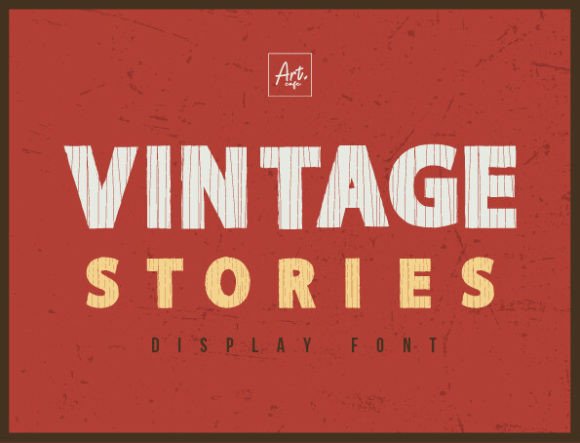
At its core, Vintage Stories is a serif font that leans confidently into its heritage. Its character shapes are robust and commanding, with the kind of sturdy serifs and slightly condensed forms you might see on early 20th-century advertising posters or antique book covers. Yet, it avoids feeling cluttered or overly ornate. The designers exercised a modern restraint, ensuring each letterform has ample breathing room. This minimalist touch is crucial. It prevents the font from becoming a caricature of the past, instead allowing it to feel timeless and versatile. The personality it projects is one of confident nostalgia—evoking the charm of a bygone era while remaining firmly functional for contemporary projects. It’s the typographic equivalent of a perfectly restored vintage item: full of character, but ready for a new life.
Where Vintage Stories Truly Shines
Understanding a font’s ideal environment is key to using it effectively. Vintage Stories is a premium font that excels as a headline or title font, where its bold presence can be fully appreciated. Think of it as the anchor for your visual hierarchy.
- Branding & Logo Design: For businesses rooted in authenticity—craft breweries, artisan bakeries, boutique hotels, heritage brands, or any small business owner wanting to convey tradition and quality—this font can form the backbone of a brand identity. It instantly communicates a story before a single word of copy is read.
- Editorial & Packaging Design: Magazine mastheads, book covers (especially for historical fiction, mystery, or romance), and packaging design for gourmet or specialty products benefit immensely. It adds a layer of perceived craftsmanship and value.
- Digital & Web Design: Used sparingly for key headlines on a website, blog, or landing page, it can create a memorable focal point that breaks the monotony of standard sans-serif text. It’s also a standout choice for social media graphics, event announcements, and promotional banners where stopping the scroll is essential.
- Print & Personal Projects: From wedding invitations and greeting cards to poster prints and scrapbooking, its appeal to crafters and hobbyists is obvious. It brings a professional, curated feel to personal creations.
Its versatility is notable. While perfect for Halloween motifs and retro designs, its clean edges also allow it to sit comfortably in more minimalist layouts, providing a surprising point of contrast. It’s a creative font that doesn’t box you into a single aesthetic.
Making It Work: Practical Guidance for Designers and Creators
Choosing a font is a practical decision as much as an aesthetic one. Here’s how to approach integrating Vintage Stories into your workflow.
Evaluating Fit and Font Pairings
First, ask if the project’s tone aligns with the font’s personality. Is the goal to evoke nostalgia, craftsmanship, or timeless elegance? If yes, it’s a strong candidate. Next, consider font pairing. Because Vintage Stories has such a distinct voice, it pairs best with neutral, understated companions. A clean sans serif font for body text is a classic and reliable choice, providing excellent readability and letting the display font do the talking. A simple script font can also work for accent text, but avoid pairing it with another highly decorative or handwritten font, as the result will likely feel chaotic.
Readability and Licensing Considerations
While stunning, its primary role is as a display font. For extended blocks of body copy, especially at small sizes on screens, readability can suffer. Always test it at the intended size and medium. Check the font package for included styles—does it offer multiple weights or stylistic alternates? These can provide valuable flexibility within a single project. Crucially, for any commercial endeavor, verify the commercial font license. Ensure it covers your specific use case, whether for client work, merchandise, or digital products. Using a properly licensed font is a non-negotiable part of professional design assets management.
In practice, using Vintage Stories is about balance. It’s a powerful tool for injecting personality and depth. Let it command attention in a headline, then step back and let cleaner typography handle the detailed communication. This approach ensures your design feels both emotionally resonant and professionally polished, leveraging the best of modern typography principles—where expression and function coexist harmoniously.